Mahiyanganaya: Where the heart rests, the mind lingers, the Kingdom of Reservoirs.
It was once Bintenna; today, it is Mahiyanganaya. Texts written during the Kandyan era, such as Amandarama Nuwara and Soragune Devala Puwatha, refer to the area by these names. Mahiyanganaya is a sacred site with an unbroken history in Sri Lanka stretching back 2,600 years. This land was first elevated to a supreme sacred ground nine months after the Enlightenment of the Great Buddha, when he visited Sri Lanka and blessed it with his footprint. This occurred on an Unduvap Poya day (Full Moon in December/January). This supreme sacred site is located in Mahiyanganaya, in the Badulla District of the Uva Province of Sri Lanka.
Another reason this blessed ground has become a particularly revered site of pilgrimage is the presence of the Miyuguna Seya (stupa), where the hair relics of the Buddha were interred. Additionally, the Sorabora Wewa (reservoir) stands serenely nearby, holding a vast volume of water that complements the Mahiyanganaya sacred area. This supreme and picturesque sacred ground became the destination of our journey today.
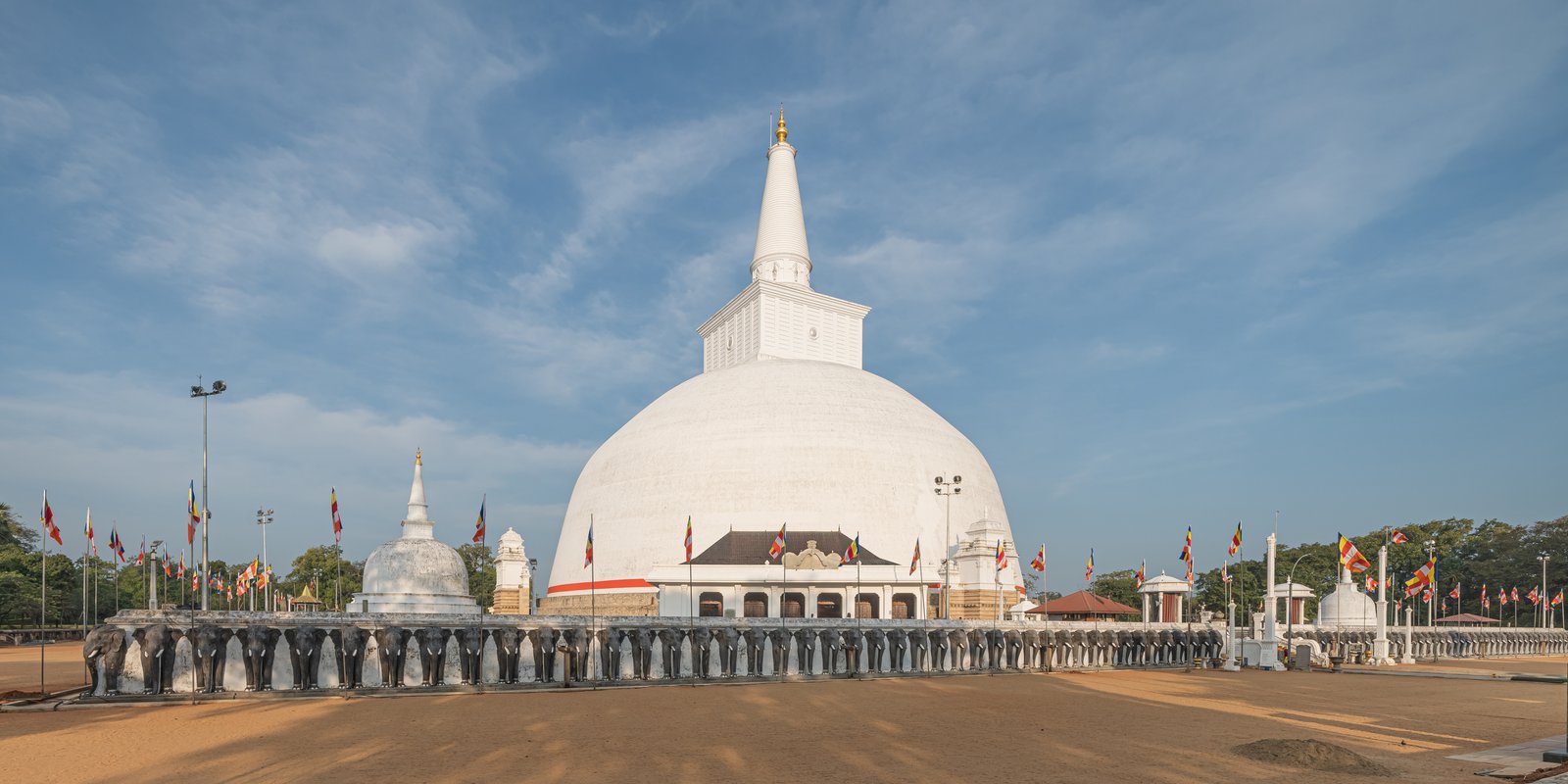
The moment we entered this blessed land, we were overcome by a unique feeling, as if travelling back into the past. Mahiyanganaya Vihara, one of the sixteen sacred sites (Solosmasthana), is worshipped by countless devotees. People dressed in white robes were reverently worshipping this sacred area. Although the Mahiyanganaya Stupa is not as gigantic and sky-high as the Ruwanweli Seya, we could see its white gleam from afar. That sight brought a profound tranquillity to our eyes and minds. The path leading to the Vihara added a further unique charm to this peaceful atmosphere.
We learned many known and unknown stories about this sacred site. Among them, the widely known account is that, upon the request of the god Sumana Saman, the hair relics of the Buddha, and after his Parinirvana, his neck bone relic (Greeva Dhatu) were enshrined to build the Miyuguna Seya. The Mahiyanganaya sacred site is considered the very first of the Solosmasthana (Sixteen Great Places of Worship).
The restoration of this blessed land to its current state has taken a long time. The final step in its modern restoration journey began in 1949 and concluded in 1961 with the placing of the pinnacle (Kotha) on the stupa. Having been subject to restoration through the ages by Arahants, deities, and kings, the Miyuguna Seya is considered the first stupa built by the gods in Sri Lanka.
Beyond this historical sacred site, we were fortunate to see another magnificent, eye-pleasing spectacle: the Sorabora Wewa. This reservoir, serenely holding a vast flow of water, is a priceless inheritance for the entire nation. We also learned the fascinating historical tale of the man who created this marvellous structure.
“Bulatha Yodhaya” (Bulatha the Giant) is a name known well by young and old. In other words, he is the astonishing creator of the wonderful Sorabora Wewa. He was a man who supplied betel leaves to the Royal Palace. While travelling back and forth, he constructed this massive reservoir using only a udaella (hoe), a katuwa (fork/pick), and a hammer. Furthermore, the path leading to the reservoir was built by Bulatha’s wife. Truly, they were people of immense strength. If they were not, the "Kingdom of Reservoirs," which feeds our nation even today, could not have been created in this manner.
It is truly a blessing to witness this supreme sacred ground. Moreover, the cool touch of Sorabora's waters brought a comforting solace that quenched the heat. You must, at least once in your lifetime, experience that cooling water touch. However, do not forget to safeguard your own safety and preserve the beauty of this sacred environment.